
Please visit All you need to know for our skiip trips to Mt. Pakenham for information regarding an agenda for each day’s activities, what our students should bring with them, and a checklist for parents. Thank you very much to M. Flipsen who has been working so hard to make this trip possible for our junior students.
Dear Parents,
Happy last Friday of the 2022-2023 school year. It has been a pleasure to spend time with your children this year. I hope you all enjoy the upcoming second long weekend of the summer and that July and August are relaxing and enjoyable. See you in September.
Kindest regards,
Mme McDonald’s Class
LANGUAGE
A Great Opportunity for Reading this Summer

On Thursday, June 22 our students participated in a presentation from the youth librarian at the Carp Branch of the Ottawa Public Library. They were very excited to learn about this opportunity to read in French and English throughout the summer. The benefits of being involved in a reading program over the summer include:
- reading more often
- developing an enjoyment of reading
- becoming a confident reading
- maintaining or improving their reading skills
- connecting with other kids
- finding books they can identify with
More information about the Summer Reading Program can be found by following clicking here.
It has been very exciting to see how our students have become so engaged in reading for engagement. They are able to sustain reading for an extended period of time. They clearly express their thoughts and opinions about the stories and nonfiction they read. We are in the process of collecting the book bags. Thank you for returning them.
Writing

Our students have become very adept at creating personalized cards for various purposes. They worked so hard on the cards and the book for Father’s Day. They are now working hard on creating cards for Mr. Blauer, Mr. Powers, Ms. Heath, and Mme Gaudet. These professionals have been a big part of everyday life here at Huntley and we will miss them. The children are creating beautiful cards. This activity has enabled our students to demonstrate their understanding of the purpose and the audience for writing. They are taking special care to attend to the proper use of writing conventions and the presentation of their writing.
MATHEMATICS
Financial Literacy

Here is the specific expectation that our students in grade two have been working on in Financial Literacy
- Explain the concepts of spending, saving, earning, and donating.
- Estimate and calculate the change required for various simple cash transactions involving whole dollar amounts and amounts of less than one dollar.
Our students have had fun comparing prices from different stores. They have become adept at determining which store has the best price and planning a list of items to buy. They have enjoyed listening to mentor texts like Alexander Who Used To Be Rich Last Sunday by Judith Viorst and Bunny Money by Rosemary Wells
The Value of Reading Each Day

Of all the homework assignments I could possibly send home with your child, 20 minutes of nightly reading is, without a doubt, the one with the greatest potential to actually benefit your child. Reading just 20 minutes a day adds up. That’s 3600 minutes in a school year…or 1 800 000 words! Contrast this with the 8 000 words a student would read if they read only 1 minute a day and you can see the difference this nightly routine can make for your child. Reading has a number of benefits:
Vocabulary Expansion
The more you read, the more words you will know. It’s that simple. When new words are presented in the context of a book (and not a grammar worksheet), students are more likely to absorb them into their own speaking and writing.
Memory Improvement
Characters. Story details. Subplots. There’s a lot going on in books! Remembering all of these happening while reading actually builds new brain pathways and strengthens existing ones. Amazing!
Improved Focus and Concentration
In our digital world, we can sometimes become easily distracted. Reading helps focus your child’s attention and concentration. Finding your ‘reading zone’ can also have the added bonus of acting as a stress reliever.
Better Writing Skills
What better way to learn the craft of writing than by reading and studying the work of authors! We will be mentoring ourselves after a variety of authors this year. Additional nightly reading at home further expands your child’s circle of influence and increases their exposure to good writing role models.
I will not be assigning reading logs or asking you to record reading minutes in the agenda. There will be no prizes awarded for the number of minutes read or books completed. In many ways, this sends the message to our children that reading is simply a task to be completed. My sincerest hope is for your child to grow their love of books throughout their year with me and that together we can establish a lifelong reading habit!
Mr. Flipsen’s Class
A Great Opportunity for Reading this Summer

On Thursday, June 22 our students participated in a presentation from the youth librarian at the Carp Branch of the Ottawa Public Library. They were very excited to learn about this opportunity to read in French and English throughout the summer. The benefits of being involved in a reading program over the summer include:
- reading more often
- developing an enjoyment of reading
- becoming a confident reading
- maintaining or improving their reading skills
- connecting with other kids
- finding books they can identify with
More information about the Summer Reading Program can be found by following clicking here.
Writing

Our students have become very adept at creating personalized cards for various purposes. They worked so hard on the cards and the book for Father’s Day. They are now working hard on creating cards for Mr. Blauer, Mr. Powers, Ms. Heath, and Mme Gaudet. These professionals have been a big part of everyday life here at Huntley and we will miss them. The children are creating beautiful cards. This activity has enabled our students to demonstrate their understanding of the purpose and the audience for writing. They are taking special care to attend to the proper use of writing conventions and the presentation of their writing.
Our Current Novel Study
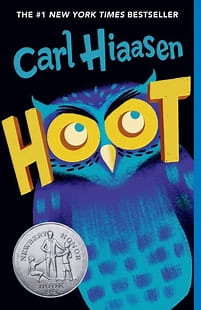
Our students are very engaged in listening to Hoot by Carl Hiaasen. Here is a brief summary of the book.
MATHEMATICS
Financial Literacy

Here are the specific expectations that our students in grade four have been working on for Financial Literacy
- identify various methods of payment that can be used to purchase goods and services
- estimate and calculate the cost of transactions involving multiple items priced in whole dollar amounts and the amount of change needed when payment is made
The Value of Reading Everyday

Of all the homework assignments I could possibly send home with your child, 20 minutes of nightly reading is, without a doubt, the one with the greatest potential to actually benefit your child. Reading just 20 minutes a day adds up. That’s 3600 minutes in a school year…or 1 800 000 words! Contrast this with the 8 000 words a student would read if they read only 1 minute a day and you can see the difference this nightly routine can make for your child. Reading has a number of benefits:
Vocabulary Expansion
The more you read, the more words you will know. It’s that simple. When new words are presented in the context of a book (and not a grammar worksheet), students are more likely to absorb them into their own speaking and writing.
Memory Improvement
Characters. Story details. Subplots. There’s a lot going on in books! Remembering all of these happening while reading actually builds new brain pathways and strengthens existing ones. Amazing!
Improved Focus and Concentration
In our digital world, we can sometimes become easily distracted. Reading helps focus your child’s attention and concentration. Finding your ‘reading zone’ can also have the added bonus of acting as a stress reliever.
Better Writing Skills
What better way to learn the craft of writing than by reading and studying the work of authors! We will be mentoring ourselves after a variety of authors this year. Additional nightly reading at home further expands your child’s circle of influence and increases their exposure to good writing role models.
I will not be assigning reading logs or asking you to record reading minutes in the agenda. There will be no prizes awarded for the number of minutes read or books completed. In many ways, this sends the message to our children that reading is simply a task to be completed. My sincerest hope is for your child to grow their love of books throughout their year with me and that together we can establish a lifelong reading habit.